You dust the shelves, vacuum the floors, and wipe down furniture, yet another layer of dust settles on those same surfaces within a day or two. When this keeps happening despite regular cleaning, your HVAC system may be part of the problem. Since it circulates air throughout your home, the system can redistribute airborne debris and carry contaminants into your living spaces.
Three common HVAC problems explain why this happens. Dirty or incorrectly fitted air filters allow fine particles to pass through instead of trapping them. Gaps in return ducts draw dirt from attics, crawl spaces, and wall cavities into the airflow. Meanwhile, accumulated dust inside the ductwork gets picked up during heating and cooling cycles and carried into rooms through supply vents.
Professional air duct cleaning in Toms River removes accumulated material from the ductwork, helping address the buildup when dirty ducts are responsible for recurring household dust.
How Your HVAC System Can Make Your House Dusty
Your HVAC system relies on several components to keep indoor air moving through the house. When filters, ductwork, or internal equipment become dirty or develop gaps, they affect how airborne material enters and travels through your living spaces. The table below highlights five HVAC-related problems and the signs that can help you recognize them:
| HVAC problem | Where dust comes from | Signs you might notice |
|---|---|---|
| Dirty or clogged air filters | Fine particles that escape filtration | Gray residue around supply vents |
| Contaminants inside air ducts | Pet hair, lint, and construction residue | Loose dirt around vent openings or visible interior buildup |
| Leaky return air ducts | Attic insulation and dirt from crawl spaces | Unusual grime around return grilles |
| Poorly sealed duct connections | Material entering through gaps at duct joints | Dirt streaks near duct connection points |
| Dirty HVAC components | Grime on blower assemblies and evaporator coils | Dark residue around accessible equipment areas |
Dirty or Clogged HVAC Air Filters
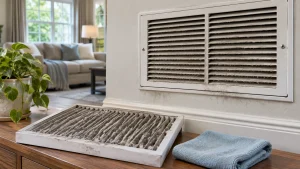
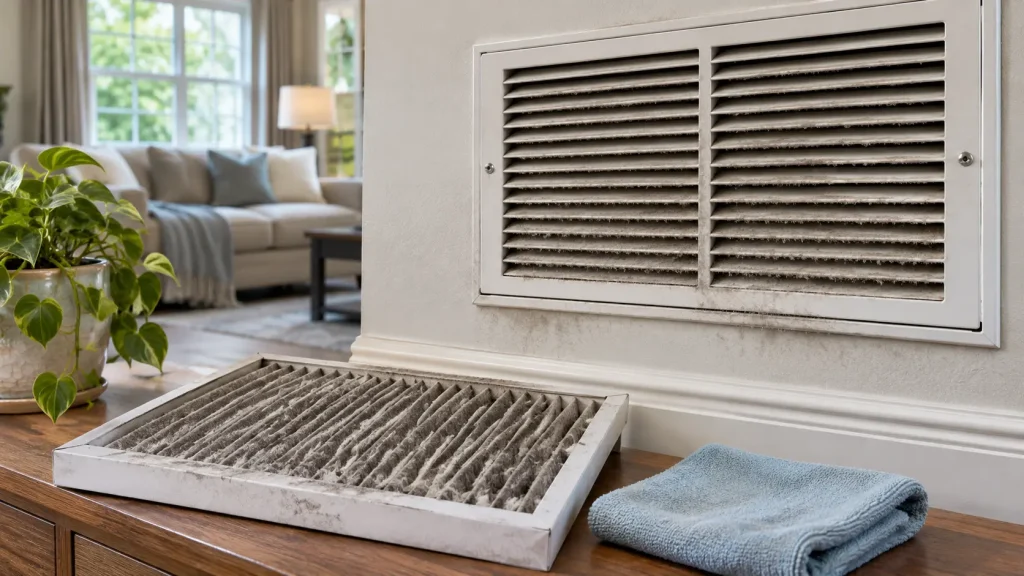
HVAC air filters capture airborne pollutants, including pollen, dust mites, and mold spores, as indoor air passes through the return side of the equipment. This helps prevent these contaminants from recirculating through the heating and cooling system. Over time, collected dirt and other material clog the filtering media, restricting airflow and reducing its effectiveness. Fine particles that are not captured remain in circulation and eventually settle on furniture, floors, and other household surfaces, adding to the recurring buildup.
Dust and Debris Inside Air Ducts
Some dust inside ductwork is normal and does not necessarily indicate a problem. Over time, however, different materials can collect along the interior surfaces, including:
- Construction residue left behind after building work
- Drywall dust from home renovations
- Pet hair, dander, and lint
- Dirt and fine debris drawn into the system over time
When the HVAC system runs, moving air disturbs these deposits and carries them into rooms through the supply vents. Once released into living spaces, they settle on surfaces, adding to the household dust that returns after cleaning.
Leaky Return Air Ducts
Return ducts draw air from rooms throughout the house and carry it back to the HVAC equipment for filtration and recirculation. Gaps or damaged sections also draw in surrounding air before it reaches the filter.
Air from these areas often carries insulation fibers, dirt, and other fine matter. The HVAC filter captures some of this incoming material, but the added particle load increases the amount of debris it must remove. Particles that escape filtration travel through the supply ducts and enter the rooms, adding to the airborne dust inside the home.
Poorly Sealed Duct Connections
Loose joints, gaps, and worn seals at duct connections create openings in the HVAC system. Their effect on household dust depends on the location of the leak and the direction of airflow:
- Supply-side connections: Lost air creates pressure differences that encourage dusty outdoor air to enter through gaps in the home’s exterior.
- Return-side connections: Negative pressure inside return ducts pulls insulation fibers and other debris through loose joints and into the airflow before filtration.
Dirty HVAC Components
Dust buildup on internal HVAC components provides another source of particles that circulate through the house. The blower assembly moves air through the equipment, while the evaporator coil helps condition it. Over time, dirt, lint, and other airborne material accumulate on these surfaces, particularly when filtration is ineffective.
When the blower operates, airflow disturbs loose debris around the equipment and carries some of it into the ductwork. What reaches the supply vents enters the rooms, adding to the dust circulating throughout the house.
How Air Duct Cleaning Helps Reduce Household Dust
The EPA identifies two situations in which air duct cleaning is worth considering: when ductwork contains excessive amounts of dust and debris, or when particles are visibly released into the home through supply registers.
Professional air duct cleaning in Toms River addresses these conditions in several ways:
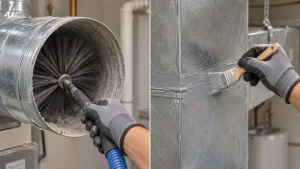
- Removes accumulated debris: Extracts built-up dust, dirt, pet hair, and other loose material from the interior of supply and return ducts.
- Cleans hard-to-reach duct sections: Removes deposits from interior surfaces, bends, and branches that are difficult to access through routine household cleaning.
- Clears contaminated registers and grilles: Eliminates accumulated debris around supply and return openings as part of the cleaning service.
- Reduces loose material in the airflow: Reduces buildup that becomes airborne and enters living spaces during HVAC operation.
Duct cleaning addresses contamination inside the HVAC system. It does not eliminate dust from pets, fabrics, daily activities, or outdoor sources. If household dust comes from leaking ductwork or inadequate filtration, those problems require separate attention.
How to Keep Your House From Getting Dusty So Quickly
HVAC maintenance plays an important role in controlling dust because the system continuously moves air through its filters and ductwork. The following steps help limit dust buildup and prevent it from circulating through your home:
- Replace HVAC air filters according to the manufacturer’s recommended schedule
- Check that filters fit securely to prevent unfiltered air from passing around the edges
- Seal leaks, loose joints, and disconnected sections in the ductwork
- Keep supply and return vents clear of furniture and other obstructions
- Schedule routine HVAC inspections to identify dirty components and ductwork problems
- Arrange professional duct cleaning if excessive deposits have accumulated inside the ducts
Frequently Asked Questions
Why does dust collect around my air vents?
Fine particles in circulating air sometimes cling to vent grilles and nearby surfaces. Black or gray marks around a register may also result from air leakage around the vent opening or residue collecting over time.
Can a dirty evaporator coil contribute to household dust?
Contaminants accumulated on an evaporator coil can interfere with proper airflow and indicate problems with system cleanliness or filtration. However, the coil is not necessarily a direct source of household dust, so an inspection is needed to determine whether it contributes to the problem.
How often should residential air ducts be professionally cleaned?
There is no universal cleaning schedule for every home. The EPA recommends considering duct cleaning when excessive dust and debris accumulate inside the ducts or particles are released into living spaces through supply registers.
Can vacuuming air ducts with a household vacuum remove accumulated dust?
Household vacuum cleaners generally lack the equipment needed to capture and contain buildup throughout an HVAC duct system. Professional cleaning uses specialized equipment to remove accumulated material while limiting its release into the home.
Why is there more dust in my house after a renovation?
Renovation work such as sanding, cutting drywall, and drilling releases fine particles that can enter HVAC supply and return vents. This may collect inside the ductwork, air filter, and other system components, where loose material can later become airborne as the system operates. Consequently, construction residue may continue circulating through supply registers until the affected HVAC components and ductwork are properly cleaned.
Schedule Professional Air Duct Cleaning to Address Recurring Household Dust
Recurring household dust may indicate buildup inside your HVAC system. Professional cleaning helps remove this buildup and address one potential source of dust circulation. Accurate Duct Cleaning provides professional air duct cleaning in Toms River to remove contaminants from your ductwork. Our team focuses on the areas that need attention to help keep your HVAC system’s air pathways clean. Contact Accurate Duct Cleaning today to schedule your air duct cleaning service.