Dust collecting around supply vents or weak airflow in certain rooms often leaves homeowners unsure about what their ductwork needs. Cleaning might seem like the obvious solution; these problems can also result from leaking connections or damaged duct sections. Choosing a service without identifying the actual problem may leave the issue unresolved.
Air duct sealing repairs leaks, gaps, and loose connections that reduce HVAC system efficiency, while air duct cleaning removes accumulated dust, dirt, dander, and debris from duct interiors. Understanding the difference between air duct sealing vs air duct cleaning helps you choose the service that addresses your specific concerns. Homes with both excessive debris and leaking duct connections may require both services.
Key Differences Between Air Duct Sealing and Air Duct Cleaning
Although both services address problems within HVAC ductwork, they serve distinct purposes. For example, guidelines from the U.S. Environmental Protection Agency (EPA) explain that air duct cleaning is a targeted, as-needed service for removing physical contamination from inside ductwork. Conversely, ENERGY STAR highlights air duct sealing as an effective way to reduce energy waste caused by leaks and poorly connected duct sections.
The following table compares the two services across their primary purposes, applications, methods, and maintenance requirements.
| Aspect | Air Duct Cleaning | Air Duct Sealing |
|---|---|---|
| Primary Goal | Removes contaminants from HVAC ductwork | Closes leaks and gaps in duct connections and surfaces |
| Main Benefit | Reduces the amount of buildup circulating through air ducts | Improves energy efficiency and lowers utility bills |
| Common Issues | Excessive dust, confirmed mold growth, pest remains, and construction debris | Loose joints, disconnected sections, damaged ducts, and air leaks |
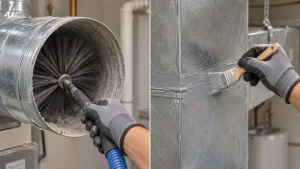
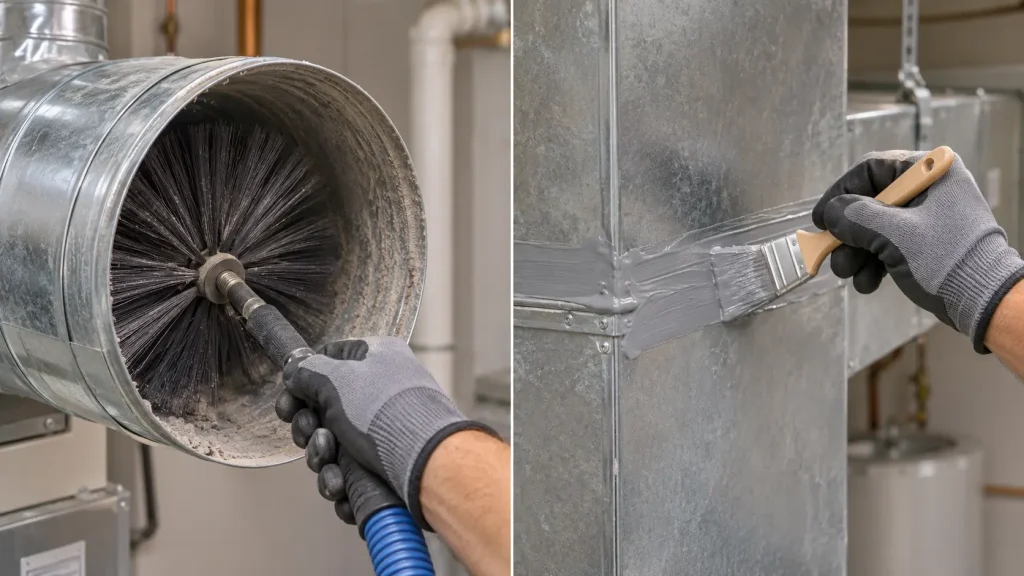
| Methods | Negative-pressure vacuums, agitation tools, and specialized brushes | Mastic sealants, approved foil-backed tapes, and aerosol sealants such as Aeroseal |
| Frequency | Performed when specific concerns arise | Usually completed once, with additional repairs when new leaks develop |
Situations That Call for Professional Air Duct Cleaning
Professional cleaning becomes worth considering when inspection reveals substantial material inside the air distribution system or evidence of a specific source of indoor contamination. Heavy deposits, pest remains, renovation residue, recurring respiratory symptoms, and confirmed microbial growth each present different circumstances that deserve closer attention before scheduling the service.
Heavy Dust and Debris Buildup
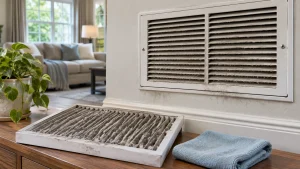
Dust and debris inside supply and return ducts call for cleaning because sealing does not remove this material. When inspection confirms substantial buildup beyond the vent openings, professional cleaning removes the deposits from the affected sections. Signs that justify duct cleaning include:
- Thick dust layers coating duct interiors
- Visible dirt, lint, and loose debris inside the air passages
- Heavy accumulation around supply and return registers
Pest Droppings and Nesting Materials
Rodent or insect activity inside air ducts often leaves behind droppings, urine, nesting remnants, and dead pests. These substances require removal because sealing alone will not clear the debris from duct interiors. Air duct cleaning addresses the affected areas after the pest activity has been controlled.
Construction Residue From Remodeling or Building Work
Home renovations can introduce construction materials into HVAC ducts, particularly when supply or return openings remain uncovered during the work. Drywall cutting, floor installation, and insulation work produce particles that enter exposed vents and settle inside connected duct sections. Common sources include:
- Drywall particles from sanding and cutting
- Sawdust from woodwork and cabinet installation
- Loose insulation fibers from wall or ceiling repairs
Getting your air ducts cleaned after renovation removes these leftover particles.
Confirmed Microbial Growth
When microbial growth is confirmed inside air ducts or on HVAC components, the affected areas need proper assessment to determine which surfaces require cleaning or removal. Correcting the moisture source is equally important because damp conditions allow microbial growth to persist or return. Sealing alone will not remove existing growth. However, it may be necessary if leaking duct connections are contributing to moisture entering the system.
Unexplained Indoor Allergy or Respiratory Flare-Ups
Recurring allergy or respiratory symptoms that seem worse when occupants spend time indoors may call for an inspection of the HVAC system. Allergens, mold, pest residue, or microbial growth inside the ducts might contribute to indoor exposure, but symptoms alone do not confirm that the air passages are responsible. When an inspection reveals significant accumulation, removing the deposits from the ducts is worth considering.
When Should You Have Your Air Ducts Sealed?
Rising energy bills, loose connections, and damaged duct surfaces can indicate air loss within an HVAC system. Gaps and openings let heated or cooled air escape before it reaches the intended rooms, forcing the equipment to work longer to maintain comfortable temperatures. Finding the source helps determine whether sealing is necessary and which areas require attention.
Higher Energy Bills
Unexpected increases in monthly energy bills may point to air leakage within the HVAC system. When conditioned air escapes through gaps or damaged sections, the equipment has to run longer to maintain the desired indoor temperature. Leaky ducts can lower HVAC system efficiency by up to 20%. Sealing these openings reduces energy loss and allows more conditioned air to reach living spaces.
Leaking Joints and Loose Connections
Loose fittings and worn sealant often leave small openings where duct sections join. These gaps send conditioned air into attics, crawl spaces, and other areas outside the living space. Several types of duct connections are prone to leakage, each with its own common causes and warning signs:
| Connection | Root Cause | Main Sign |
|---|---|---|
| Metal Seams | Vibrations or deteriorated sealing tape | Peeling tape or dark dust lines |
| Branch Take-offs | Missing metal fasteners | Gaps or sagging duct sections |
| Unit Plenums | High heat or cracked mastic | Air escaping near the HVAC unit base |
| Vent Boots | House settling or foot traffic | Gaps hidden behind the vent grille |
Sealing these connections with suitable duct sealant or approved foil-backed tape closes the gaps and prevents further air loss.
Cracks and Holes in Ducts
Age, wear, and accidental impact can leave splits or punctures along duct walls. These openings create gaps in the system’s outer surface, causing conditioned air to leak into surrounding spaces. Common signs include:
- Splits along metal duct walls
- Punctures from screws or sharp objects
- Tears in flexible ducts
- Missing or deteriorated insulation around ducts
Small cracks and holes are often sealed with mastic or approved foil-backed tape, while severely compromised duct sections may need replacement.
Excessive Leakage Confirmed by Testing
Duct leakage testing measures how much air is lost through the HVAC system and helps locate the areas responsible for excessive leakage. Results showing air loss beyond acceptable levels indicate that sealing is necessary to improve system performance. Technicians can then close leaking joints, repair holes, and secure loose connections based on the test findings.
When Your Home Needs Both Air Duct Cleaning and Sealing
Your home may need both services if an HVAC assessment reveals significant contamination inside the ducts, along with leaking joints, loose connections, or damaged sections. For example, renovation debris inside the air passages combined with gaps in duct connections calls for both treatments. Getting only one service would leave the other concern unresolved.
Air duct cleaning must always be completed before air duct sealing begins. Removing accumulated debris first prepares the duct surfaces for proper sealant application. Once cleaning is complete and the surfaces are dry, technicians can seal the leaking connections and repair suitable openings.
How Much Do Air Duct Cleaning and Sealing Cost?
The cost difference in air duct sealing vs air duct cleaning depends on the type of service your home needs. Cleaning charges vary according to home size, the amount of debris inside the ducts, and accessibility.
| Cost Factor | Air Duct Cleaning | Air Duct Sealing |
|---|---|---|
| Average cost | $450 to $1,000 | $1,000 to $6,000 |
| Cost per square foot | $0.20 to $0.40 | $1 to $2 |
Note: Final charges depend on the home’s size, the extent of duct contamination, and how easily technicians can access the system. Cleaning companies may charge by supply vent or home square footage, while sealing estimates commonly use the square footage of the area being serviced.
Not Sure What Your Ducts Need? Call Accurate Duct Cleaning for an Inspection
Choosing between air duct sealing vs air duct cleaning starts with finding out what is actually wrong with your ductwork. Accurate Duct Cleaning takes the time to assess your HVAC system, explain the findings, and recommend only the services your property needs. Our team provides residential and commercial air duct cleaning, with careful attention to the condition of your system and the concerns identified during the assessment. Contact Accurate Duct Cleaning today to schedule an inspection and get straightforward advice about your ductwork.
Frequently Asked Questions
What is the main difference between air duct sealing and air duct cleaning?
Air duct sealing closes leaks, gaps, and loose connections to reduce air loss. Duct cleaning removes accumulated dust, dirt, and other debris from duct interiors. Each service addresses a different problem within the HVAC system.
Does air duct cleaning fix the same problems as duct sealing?
No. Cleaning removes unwanted deposits but does not repair leaking joints, holes, or disconnected sections. Those problems require duct sealing or physical repairs.
Can I choose duct sealing instead of cleaning if my home has excessive dust?
That depends on where the dust is coming from. Sealing may reduce dust entering through leaking return ducts, but existing deposits inside the system require cleaning.
Can duct sealing and cleaning be completed during the same appointment?
Yes, provided the company has enough time and the necessary equipment for both services. Technicians should complete cleaning first, allow the relevant surfaces to dry, and then proceed with sealing.
Is air duct sealing more expensive than air duct cleaning?
Generally, yes. Residential duct sealing often costs $1,000 to $6,000, while air duct cleaning commonly ranges from $450 to $1,000. Actual charges depend on the size of the home, the condition of the system, and the work involved.
Can duct cleaning improve airflow without sealing the ducts?
Yes, if accumulated debris is restricting airflow inside the ductwork or on relevant HVAC components. However, cleaning will not correct air loss caused by leaking joints or damaged sections.