The chimney crown takes the first hit from rain, snow, sunlight, and changing temperatures. A small crack at the top of the chimney may seem harmless in summer, but once water enters that crack and winter temperatures arrive, the damage can spread into the crown and masonry below.
Scheduling chimney crown repair before winter can stop an existing water-entry problem from becoming harder to correct after repeated freezing and thawing. The key is knowing which changes around the crown, bricks, fireplace, and nearby walls point to a problem at the top of the chimney.
Why Chimney Crown Repair Matters Before Winter?
The chimney crown is the masonry surface at the top of a masonry chimney. It surrounds the flue opening and helps direct rain and melting snow away from the brickwork below.
The crown is different from the chimney cap. The cap covers the flue opening. The crown covers the top of the masonry structure around it.
A crown in good condition sheds water away from the chimney. When cracks, gaps, low areas, or broken sections develop, moisture can reach parts of the masonry that should stay protected.
The Chimney Safety Institute of America states that water causes more annual damage to masonry chimneys than fire. CSIA also notes that water penetration can contribute to broken brickwork, rusted dampers, damaged wall coverings, deteriorated mortar, and cracked flue liners. CSIA’s chimney water-damage guidance recommends repairing or replacing a damaged crown as part of moisture control.
Winter raises the concern because moisture already inside cracks can go through freezing and thawing cycles. A crown problem that looks unchanged during warm weather may be in worse condition after another winter.
1. Chimney Crown Cracks Are the First Problem to Check
Visible cracking is one of the clearest reasons to consider chimney crown repair.
Some crown cracks begin as thin lines across the surface. Others develop around the flue, along an edge, or through an older repair. The size of the crack matters, but its location and depth matter too.
A surface crack gives water an entry point. Once moisture reaches the material beneath the surface, weather exposure can continue to open the damaged area.
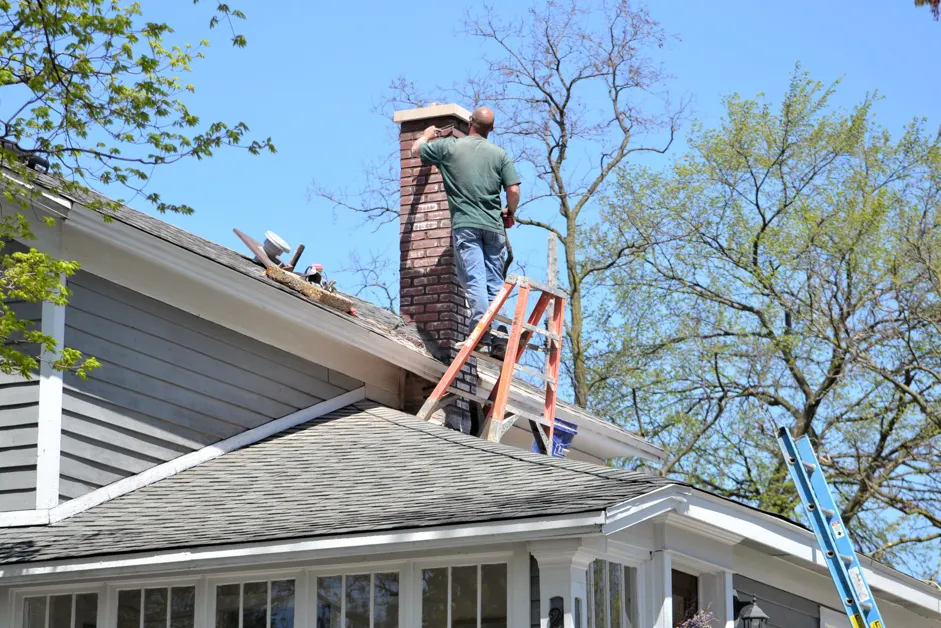
A homeowner looking from the ground may not see these cracks. The top of the chimney usually needs closer inspection because the crown faces upward.
This is why a chimney inspection before heating season can be useful when the crown has not been checked for several years. The inspection can look at the crown along with the cap, flashing, bricks, mortar, liner, and other parts that may show moisture-related damage.
Waiting for a crack to become visible from the yard can mean the deterioration has already advanced beyond the surface.
2. Crumbling or Flaking Crown Material Points to Masonry Deterioration
A chimney crown should not shed pieces of masonry.
If pieces of concrete or mortar are breaking away, or the top surface looks rough and worn, the crown has moved beyond a simple appearance issue. Material loss means part of the protective surface is deteriorating.
You might notice loose pieces on the roof, in a gutter, or around the base of the home after storms. From above, the crown may have pits, missing edges, or areas where layers are flaking away.
This condition is often called spalling when the surface begins breaking into flakes or pieces.
Water plays a major part in masonry deterioration. CSIA explains that prolonged water exposure can create cracks and gaps in chimney systems and can damage both exterior and interior components.
A deteriorated crown should be assessed before winter because another season of moisture and freezing temperatures can remove more material.
Depending on the extent of the damage, the solution may range from repairing affected areas to rebuilding the crown. A coating alone cannot restore masonry that is already breaking apart.
3. Water Pooling on the Chimney Crown Means It is Not Shedding Rain Correctly
A chimney crown should direct water away from the flue and brickwork.
If the surface is flat, uneven, sunken, or damaged enough to hold water, moisture remains on top longer after rain or melting snow.
Standing water creates more opportunity for moisture to enter small cracks and porous masonry.
This can happen when the crown was built without enough slope or when age has created low sections. CSIA recommends that crowns project beyond the chimney sides to help protect the vertical brick and mortar from water.
A crown that has no useful slope or overhang may require more than filling a few cracks. The shape of the crown itself can be contributing to the moisture problem.
That is an important distinction before choosing a chimney crown repair method.
4. Gaps Around the Flue Can Let Water Into the Chimney Structure
Look closely at the area where the flue passes through the crown.
The crown and flue are exposed to temperature changes, and problems can develop around the joint between them. Cracking or separation in this area creates another route for water.
The gap may look like a thin line around the flue at first. Over time, material can pull away or break apart.
Water entering near the flue does not always remain at the top. It can move into the chimney system and show up farther below.
This is one reason a homeowner may notice a water problem at the fireplace even though the roof around the chimney appears dry.
Repair should address the failed area rather than covering the crown without examining how water is entering.
5. White Staining on Chimney Bricks Can Point to Moisture Movement
White powder or staining on the exterior masonry is often called efflorescence.
It forms when moisture moves through masonry, carries soluble salts toward the surface, and leaves deposits after the water evaporates.
Efflorescence does not prove that the crown is the only source of moisture. Flashing, mortar joints, masonry absorption, and other conditions can also allow water into a chimney.
However, white staining below a cracked or deteriorated crown is a reason to investigate the top of the chimney.
A crown that allows water into the masonry can contribute to repeated moisture movement through the bricks and mortar below.
Wiping away the white material only removes the visible deposit. It does not identify why moisture is present.
If the crown, cap, mortar, and flashing have not been evaluated, the source should be identified before winter weather adds more water to the system.
6. Spalling Bricks Below the Crown Can Mean Water Damage Has Spread
Crown deterioration can become a masonry problem below the top of the chimney.
Watch for brick faces that are flaking, peeling, breaking off, or losing sections. Mortar joints may also begin to crack or crumble.
Once damage appears below the crown, the repair may involve more than the crown itself.
Water can enter through a failed crown and move into the upper courses of masonry. Repeated weather exposure can then contribute to deterioration in both brick and mortar.
This is why early chimney crown repair can matter financially. Repairing the water-entry point while the surrounding brickwork remains sound is a different scope from repairing the crown plus damaged masonry.
If bricks have already begun breaking apart, a broader chimney repair assessment can determine how far the damage extends. Exterior cracks, spalling, efflorescence, deteriorated mortar, water stains, and rust are conditions associated with chimney repair needs.
7. Water Stains Near the Fireplace Can Trace Back to Crown Damage
Not every chimney crown problem stays outdoors.
Water stains on the ceiling or walls around a fireplace can mean moisture has entered somewhere in the chimney or roof system.
The crown is one possible source. Flashing, a damaged cap, roof conditions, or other masonry defects can create similar symptoms.
For that reason, an interior stain should not lead to an automatic crown diagnosis.
What it should lead to is an inspection.
CSIA identifies dripping or standing water around the chimney and fireplace as evidence that water has found an access point. It also notes that water damage visible near the fireplace may indicate that damage higher in the structure has already developed.
If stains become darker after rain or snowmelt, the moisture source should be identified before winter.
Painting over the stain does not stop the water.
8. Rust Around the Damper or Firebox Can Point to Water Entry Above
Rust is another indoor clue homeowners can miss.
The damper and other metal components inside a fireplace should not receive enough water to develop ongoing corrosion. When rust appears, moisture is reaching the chimney system from somewhere.
CSIA identifies rust stains as a concern because they show water is accessing the chimney structure.
A cracked crown is one possible entry point, along with a damaged cap or flashing.
Look for rust on the damper, around metal fireplace parts, or in areas that previously stayed dry.
A sticking damper can also deserve attention when rust is present.
Repairing the crown makes sense only after confirming the source. If the crown is sound and the water is entering through damaged flashing, crown work alone will not solve the leak.
This is where inspection protects the homeowner from repairing the wrong component.
9. Mortar Joints Near the Top of the Chimney May Start Breaking Down
The bricks directly below the crown receive much of the weather exposure that reaches the top of the chimney.
If the crown is no longer shedding water correctly, those upper mortar joints can begin to deteriorate.
Look for joints that appear recessed, cracked, loose, or partly missing. Small pieces of mortar may fall away from the chimney.
This does not mean every mortar problem started at the crown. Age, previous repairs, masonry condition, and weather exposure can all affect mortar.
However, damaged mortar combined with crown cracks makes water entry more likely.
The repair plan may need to address both areas.
Filling the crown crack while leaving failed joints open can leave another path for moisture. Repointing the masonry without correcting a leaking crown can allow the same water problem to continue.
The chimney should be treated as one connected masonry system.
10. A Crown With Little or No Overhang Can Keep Wetting the Brickwork
A crown does more than cover the top of the chimney.
Its shape should help send water away from the masonry below.
CSIA recommends a crown projection of about two inches beyond the chimney sides to help reduce erosion of the brick and mortar on vertical surfaces.
If the crown ends flush with the brickwork, rain can run down the face of the chimney instead of dripping clear of it.
This may be an original construction issue rather than damage that developed later.
A homeowner might keep repairing mortar joints while overlooking the reason those upper bricks receive so much water.
Where the crown has poor slope, little projection, and recurring cracks, rebuilding it can make more sense than repeating surface repairs.
Also Read: How Fireplace Flue Cleaning Helps Prevent Chimney Fires?
Does a Cracked Chimney Crown Need Repair or a Full Rebuild?
Not every damaged crown requires replacement.
The right chimney crown repair depends on how much of the crown remains sound.
Small cracks in an otherwise stable crown may be repairable after the surface and crack condition are assessed. More extensive cracking, missing sections, poor slope, heavy spalling, or a crown that was built incorrectly can require partial or complete rebuilding.
The decision should consider:
- Width, depth, and number of cracks
- Whether crown material is breaking apart
- Water pooling on the surface
- Condition around the flue
- Crown slope and overhang
- Damage to bricks below the crown
- Previous crown repairs
- Evidence of water inside the chimney or home
The goal is to correct the reason water is entering, not to hide visible cracks until the next season.
Can Chimney Crown Sealant Replace Crown Repair?
A coating can be useful in the right situation, but it should not be treated as a replacement for masonry repair.
A sound crown with limited surface cracking is different from one that has broken sections, loose material, deep cracks, or poor construction.
Applying a coating over failing masonry leaves the structural problem underneath.
CSIA also cautions against non-vapor-permeable waterproofing products on masonry because trapping moisture inside the chimney can speed deterioration.
The crown needs to be assessed before a product is selected.
If repair is required, damaged areas should be corrected first. Waterproofing or crown protection can then be considered as part of the maintenance plan where appropriate.
Why Fall Is a Good Time to Check Chimney Crown Damage?
The best time to discover a crown problem is before the fireplace enters regular winter use and before repeated freezing weather.
Summer and early fall give homeowners time to inspect exterior masonry, address leaks, and complete needed repairs while roof conditions are more workable.
The crown also needs suitable conditions for many repair materials to cure as intended. Waiting until the coldest part of winter can reduce scheduling options and may leave existing cracks exposed through more rain, snow, and freezing weather.
An autumn chimney check should include more than looking into the fireplace from below.
The crown, cap, upper masonry, flashing, and visible exterior surfaces all deserve attention because many moisture problems begin above the roofline.
Schedule Chimney Crown Repair Before Water Damage Spreads
A cracked crown is easy to ignore because most homeowners cannot see it during daily life. The problem becomes harder to ignore when bricks start breaking apart, the damper begins rusting, or a water stain appears around the fireplace. By that stage, the repair may involve more than the crown.
Accurate Duct Cleaning provides chimney crown repair and crown rebuilding in Toms River and surrounding New Jersey communities, along with chimney inspections, chimney repair, cleaning, cap services, pointing, liner work, and other chimney services listed on its website. We can inspect the condition of the crown and surrounding chimney to determine whether the problem calls for crack repair, broader masonry work, or crown rebuilding. If you have noticed cracks, crumbling material, water stains, rust, or damaged brickwork before winter, contact Accurate Duct Cleaning before another season of moisture reaches the damaged area.